
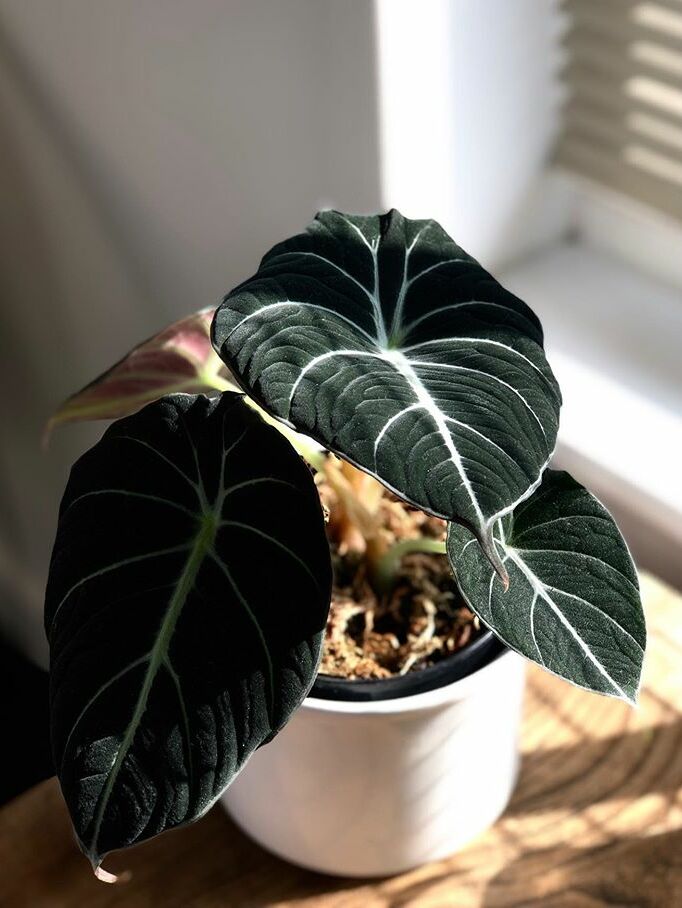
| Botanical Name | Alocasia Reginula |
| Family | Araceae |
| Soil Type/Ph | Well drained, Acidic/neutral |
| Sun Exposure | Part shade |
| Toxicity | Toxic to animals/humans |
Caring For A Black Velvet Alocasia
Black Velvet Alocasia’s are a stunning option if you’re looking for a unique indoor plant. They are known for their larger heart shaped leaves, silver veins, and deep velvety green leaves that appear to be black when cared for properly. A common name for this plant that you might know would be “elephant ears”. This specific type of Alocasia is slow-growing and smaller than its counterparts. This plant is not recommended for those of you who have trouble keeping things alive- without the right care they can go dormant and lose their leaves. Be sure to keep this plant away from your little fur babies- for it is considered toxic.
Soil Requirements
These plants require loose, well draining soil. It is best to avoid mediums that retain moisture such as peat moss or coco coir. You can help with drainage by adding some river rocks to the bottom of the pot you are using. Make sure the pot has drainage holes to promote drainage.
Light Requirements
Avoid direct sunlight, this can burn the leaves. Choosing a location with light, dappled sun will provide optimal results. Choose a north or east facing window. If it is not receiving optimal light you will notice that the foliage gets leggy and long- and the foliage will lose its dark color.
Water Requirements
You want to make sure not to leave these plants in sitting water. They are susceptible to root rot so making sure the soil isn’t soggy is important. Allow 20% of the topsoil to dry completely before watering again. Providing this plant with a humidity tray will prevent it from getting wet feet, and provide it with the humidity it needs to survive. You can do this by propping the pot on a tray that is filled with pebbles. Once winter comes around make sure to reduce watering and allow soil to dry out between.
Humidity/Temperature Requirements
This plant is considered a tropical plant. So it does thrive on warmth and humidity. Keep it away from cold drafts such as beside a front door, or under an AC unit. These plants grow best in temperatures of 70 degrees and above.
Fertilizer
Fertilizing is not necessary- But it doesn’t hurt to feed this plant with a balanced liquid fertilizer through its growing period.
Common Pests/Diseases
These plants are usually not bothered by pests or diseases. But spider mites can appear if humidity requirements are not met.
When You Should Repot Your Alocasia
This alocasia is slow growing and enjoys being slightly rootbound. So it isn’t likely that you will have to repot this plant more than once every couple of years.
Black Velvet Alocasia is a beautiful plant to keep in your home. With the right care and attention- you can keep this plant thriving for years to come!
Thank you for reading. Feel free to leave any comments or questions below and I will get back to you. I hope this information has helped some of you! Happy Gardening 🙂
 Native Grounds Farm