
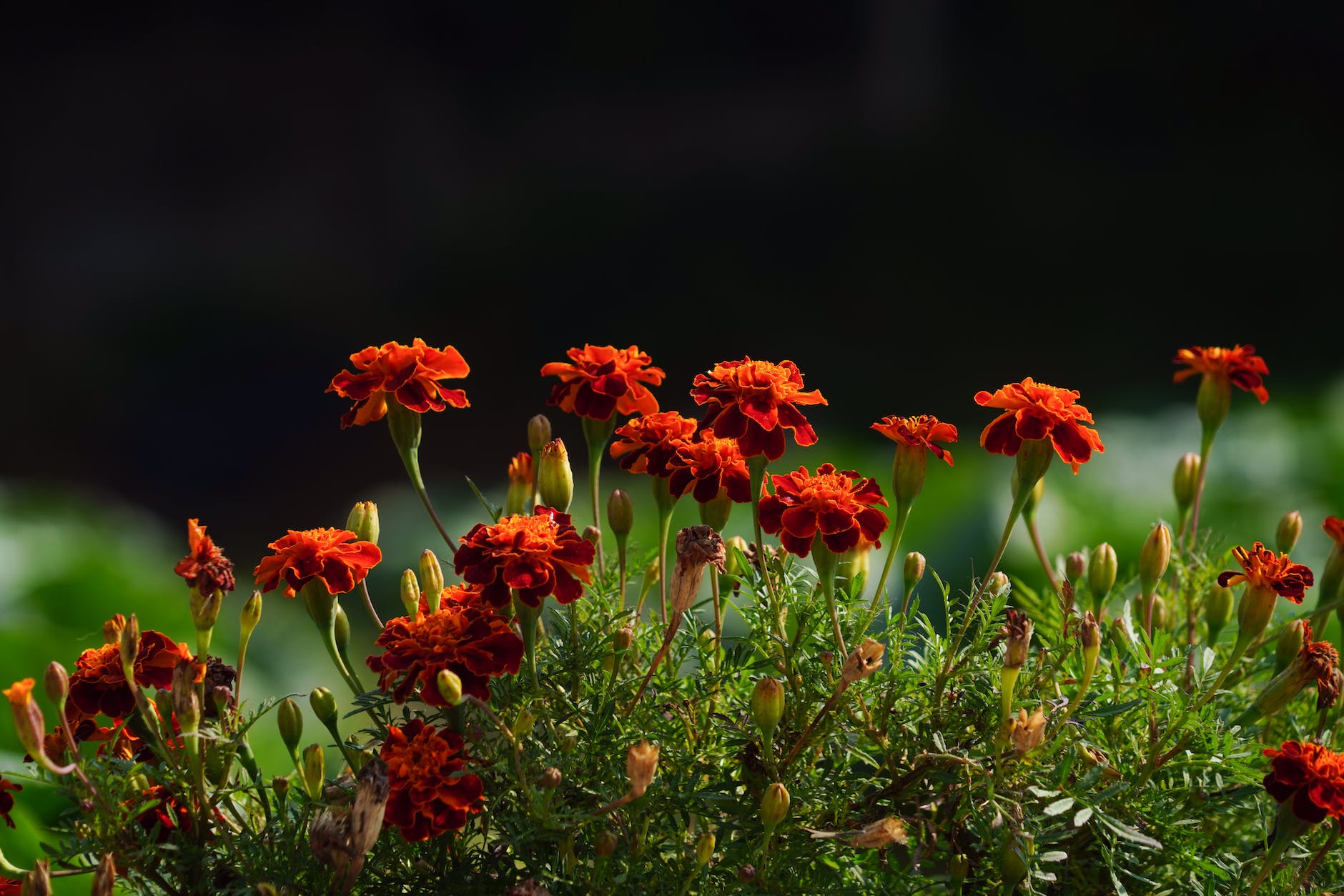
Marigolds are a popular and easy-to-grow annual flower that is perfect for brightening up any garden. With their bright, sunny blooms and low maintenance needs, they are a favorite among gardeners of all skill levels. In this blog, we’ll cover everything you need to know about caring for marigolds, from planting to pruning and beyond.

Planting Marigolds
Marigolds are typically grown from seed, which can be sown directly into the garden bed or started indoors and transplanted. They prefer full sun and well-draining soil, so make sure to choose a spot in your garden that receives at least six hours of direct sunlight each day. Marigolds can also tolerate some drought, so be sure not to over-water them.
If you’re starting your marigolds indoors, sow the seeds in seedling trays about six to eight weeks before the last frost date in your area. When the seedlings have grown to about two inches tall, you can transplant them outside. Make sure to harden off your seedlings for a few days before transplanting, to acclimate them to outdoor conditions.
Caring for Marigolds
Marigolds are generally low-maintenance plants, but they do require some care to thrive. Here are some tips for caring for your marigolds:
- Watering: Marigolds prefer soil that is moist but not waterlogged, so make sure to water them deeply once a week, or more often during hot, dry weather. Avoid getting the leaves wet when you water, as this can lead to fungal diseases.
- Fertilizing: Marigolds don’t require a lot of fertilizer, but you can give them a boost with a balanced fertilizer every four to six weeks.
- Deadheading: To encourage your marigolds to continue blooming, remove spent blooms regularly. This will also prevent the plant from going to seed too quickly.
- Pruning: Marigolds don’t require much pruning, but you can pinch back the tips of the stems to encourage bushier growth.
- Pest control: Marigolds are relatively pest-resistant, but you may need to watch out for aphids, spider mites, and whiteflies. If you notice any of these pests, you can control them with an insecticidal soap or neem oil.
- Disease control: Marigolds are also relatively disease-resistant, but they can be susceptible to fungal diseases if they get too wet. To prevent this, make sure to water at the base of the plant and avoid getting the leaves wet.
Varieties of Marigolds
There are many different varieties of marigolds to choose from, including:
- African marigolds: These are the largest and showiest of the marigold varieties, with blooms that can reach up to four inches across.
- French marigolds: These are smaller and more compact than African marigolds, with blooms that are typically two inches across.
- Signet marigolds: These are the smallest of the marigold varieties, with blooms that are less than an inch across. They are often grown for their attractive foliage as well as their blooms.

In conclusion, marigolds are a versatile and easy-to-grow annual flower that can add a bright pop of color to any garden. With proper planting, care, and maintenance, your marigolds are sure to thrive and provide you with beautiful blooms all season long.
Thanks for taking the time to read! I hope this helped you with your gardening journey- feel free to leave any comments or questions below 🙂 Happy Gardening!
 Native Grounds Farm