
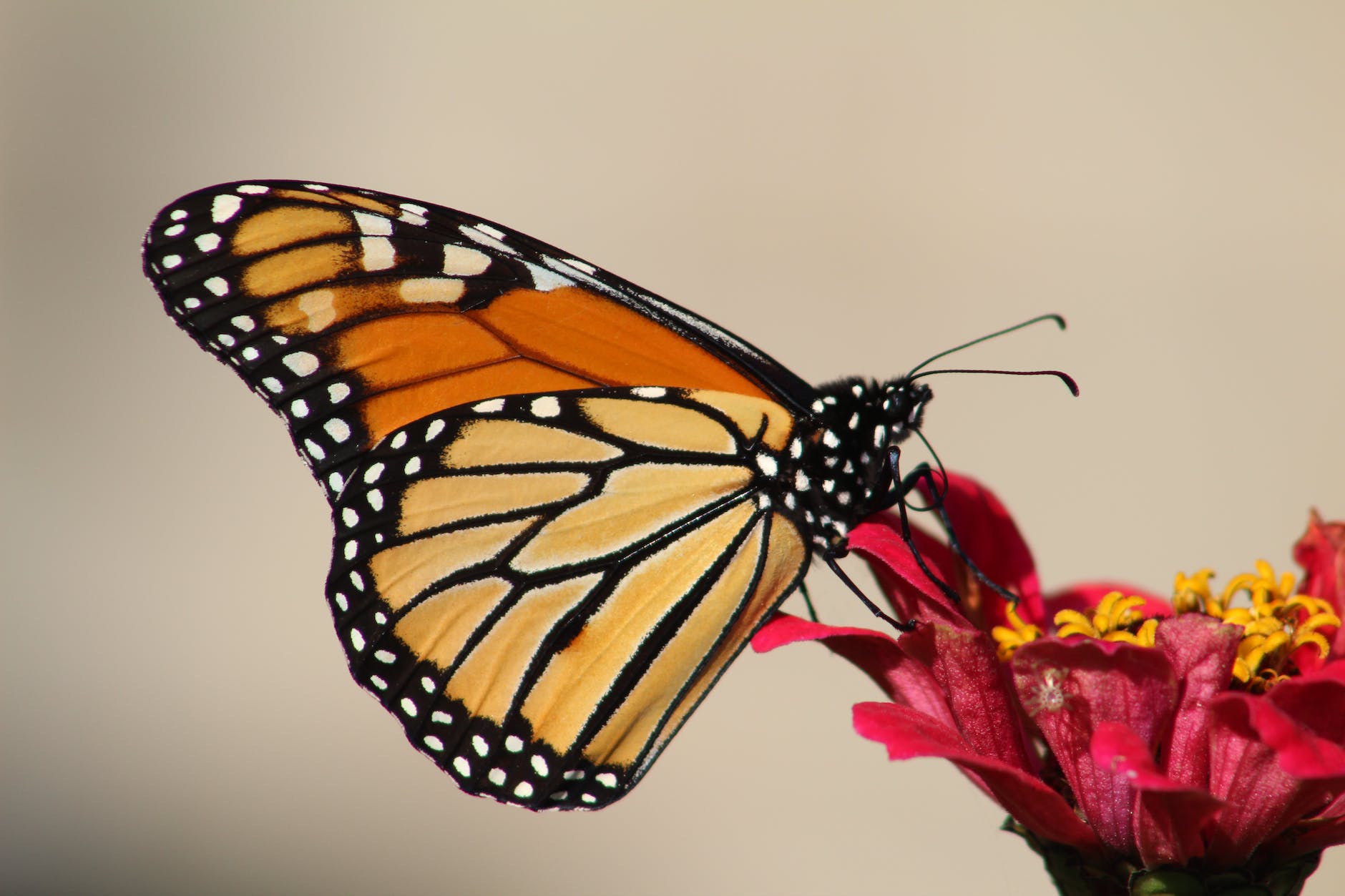
If I asked you right now to think of a butterfly- I can pretty much guess with certainty that it’s the monarch butterfly that would pop into your head. This is because they are the most well-known and studied species on the planet. These butterflies are depicted in movies, shows, and books. They symbolize transformation and rebirth. The unfortunate news is that day by day, the chances of seeing one in person are dwindling dramatically. They are considered endangered by the International Union for Conservation of Nature (IUCN). If we keep heading in the direction we are now- then we might find ourselves living in a world where monarchs don’t even exist anymore.
A butterfly has four stages of life:
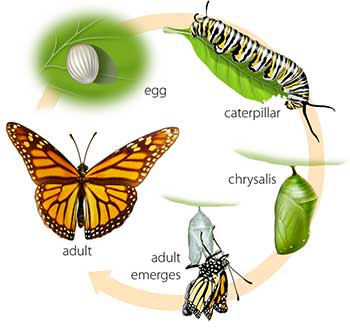
Stage One: The Egg: Butterflies start as a tiny egg sac laid beneath the leaves of a milkweed plant. The larva will grow inside of this egg sac until it is big enough to chew a hole through the egg and wiggle its way out. It will then feast on the remaining portions of the egg as its first nutritious meal.
Stage Two: The Larva (Caterpillar) : The larvae will spend the majority of their time feasting on the leaves of the milkweed. This is the only plant that monarch larvae eat- which makes it an extremely important plant to keep safe. Once the larva has eaten enough, it will start to get bigger and start its molting process. Over time as the caterpillar grows in size- it sheds its old outer layer of skin to reveal a new more fit covering. Once they get big enough and come to their last molt- The larva will find a suitable place to transform into its final stage. This could be many many miles from its old milkweed home. Once it finds a suitable place, the larva will spin a silk mat for the caterpillar to hang upside down from. It rests in a “J” shaped position and begins its last molt.
Stage Three: The Pupa (Chrysalis): Once the skin falls off of the larva, it becomes a pupa. This is where the major transformation occurs. The antennas grow in, they grow their long legs, and create beautiful aerodynamic wings. Many butterflies can take up to a week or so in this stage- using all that stored energy from stage two to form all the things that make a butterfly, a butterfly.
Stage Four: Adult Butterfly: Once the pupa has finished its process, an adult butterfly will emerge from its chrysalis. It will take a couple hours for it to pump its body fluid through its wings, inflating them to start its great migration. From this stage on, the monarch butterfly will rely on nectar and water to nourish and sustain itself.
The Migration of the Monarch Butterfly:
After the transformation from caterpillar to butterfly occurs- the time starts ticking since they normally only have a life span of 2-6 weeks. (except for the last generation since they can live from 8-9 months) Monarch Butterflies are the only species to migrate two ways like birds do. According to USDA.gov “Monarchs in Eastern North America have a second home in the Sierra Madre Mountains of Mexico. Monarchs in Western North America overwinter in California.”.
How Monarchs are Beneficial to Our Own Eco-System:
Pollinators are truly responsible for all the beautiful plants we get to enjoy in our lives. Without proper pollination- plants can’t reproduce. Plants will not be able to create fruits or seeds to survive another generation. So you can imagine how important it is to create a space that encourages pollinators to come to your garden.
How to Give The Monarch Population a Reboot:
With the population declining, it becomes our responsibility to help set things right. Luckily this isn’t hard to do! The best way that we (as gardeners) can help is to plant more pollinator-friendly plants in our garden. If you really want to help, consider planting some milkweed in your garden to provide shelter and food for these beautiful monarchs! If you’re looking for some great ideas to start your own pollinator garden- check out “Starting your own pollinator garden“. There are tons of great options here to create a space for pollinators to thrive!
Thanks for stopping by and I hope this information helps you on your gardening journey! Feel free to leave any comments or questions below and I’d be happy to get back to you. Happy gardening 🙂
 Native Grounds Farm
I always have something growing for the butterflies. Milkweed, butterfly bushes and even marigolds are especially loved.
LikeLike
That’s amazing! Marigolds are definitely a pollinators favorite!!!! 💓 thanks for reading 😄
LikeLike